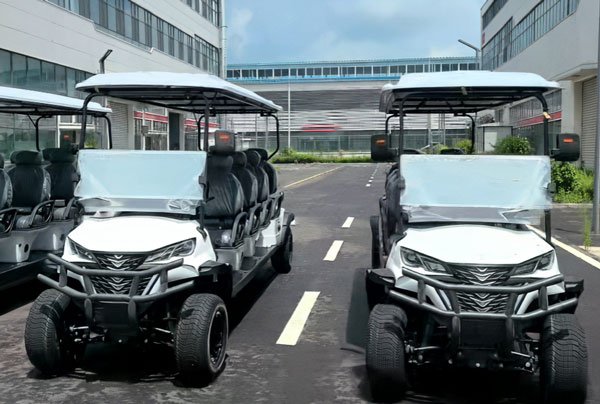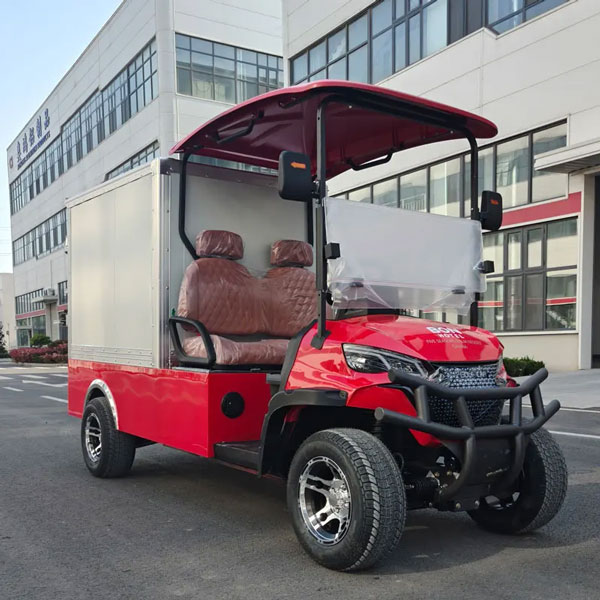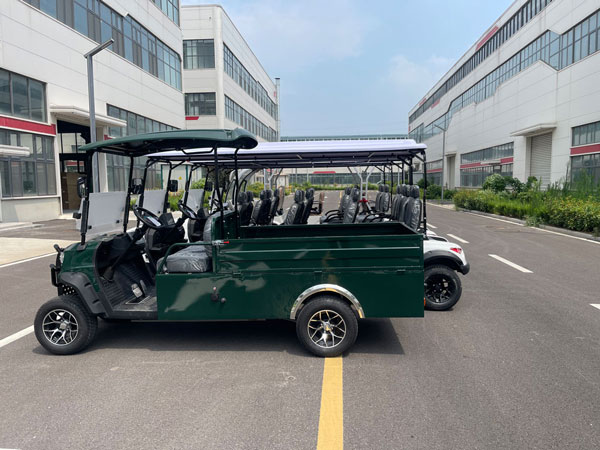
Early in the morning on a family farm in California, Tom drives his beat-up pickup back and forth between the orchard and the storage shed. He does the math: just from short-haul transport within the farm, he burns nearly $20 in fuel every day. His neighbor Jack, who bought a golf cart with a cargo bed last year, rarely starts his pickup for on-site trips anymore.
This isn’t an isolated case. From multi‑acre farms to gated communities and large construction sites, these small vehicles—once found only on golf courses—are making a quiet but significant shift across industries.
The Farm’s “Last Mile”
For farmers, time is literally the lifeblood of their crops.
Traditional farm work has an awkward gap: walking is too slow, but firing up a pickup feels like overkill. Distances from the storage shed to the greenhouse, from the chicken coop to the orchard—often just a few hundred feet to a mile or two—are exactly the trips that get repeated most throughout the day.
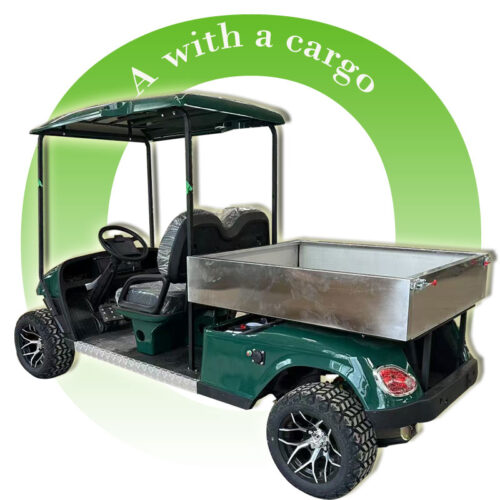
A golf cart with a cargo bed fills that gap perfectly.
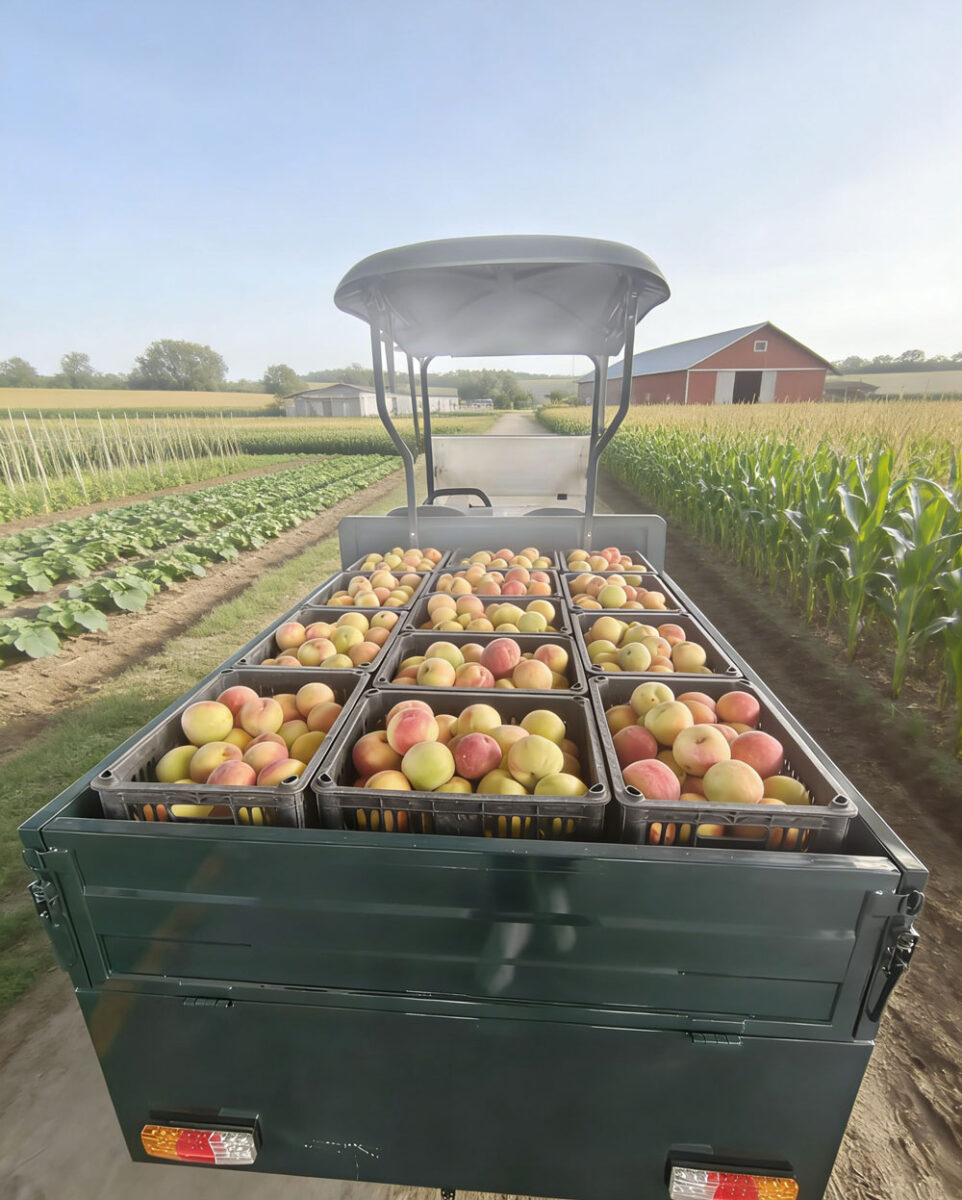
It weaves easily through narrow field ridges, with a turning radius tight enough to maneuver between rows of fruit trees. The cargo bed can hold freshly picked vegetables, a few bags of fertilizer, pruning tools, or several trays of eggs. On a livestock farm, a simple modification turns the bed into a mobile feeding station.
Perhaps more importantly, it’s quiet. A diesel pickup roaring through the yard would spook the animals, but a golf cart glides in without causing any disturbance. The livestock barely notice.
One farmer running a 50‑acre organic operation did the math: a new electric golf cart with a cargo bed costs around $8,000–$12,000, while a new pickup starts at $40,000. For short‑haul transport within the farm, the per‑mile operating cost of the golf cart is less than one‑tenth that of a pickup. Over three years, the savings on fuel and maintenance alone would cover the cost of two more carts.
The Community’s “Invisible Handyman”
In large residential communities, retirement villages, and resort complexes, these vehicles are quickly becoming standard equipment for property management.
Security guards use them for patrols—quiet enough not to disturb residents, with the cargo bed ready to hold traffic cones, two‑way radios, and emergency gear. Maintenance crews heading to fix a leaky pipe can toss their tools into the bed and get there far more conveniently than in a full‑size truck. Landscapers load trimmings straight into the bed and haul them away in one trip.
Residents themselves are catching on. Heading to the clubhouse for a swim, taking kids to the playground, or picking up a package from the locker—all are trips where a golf cart beats an SUV for convenience. More communities are now offering shared carts that residents can check out on demand, much like bike‑sharing programs.
For property managers, bringing in a fleet of golf carts with cargo beds costs far less than hiring extra workers who would otherwise drive pickups on countless short trips. One cart replaces work vehicles that would otherwise be constantly stopping and starting—reducing fuel use and, just as importantly, lowering the risk of on‑site accidents. After all, a collision involving a cart traveling 15 mph is far less serious than one involving a pickup.
The Construction Site’s “Go‑Fer”
Construction sites may be one of the most underrated use cases.
On a large job site, foremen constantly move between different work areas to coordinate. Materials need to be shuttled in small batches between supply points and active zones. Tools need to move with the crew.
This is where a golf cart with a cargo bed proves its value.
It hauls small generators, a few bags of cement, a box of scaffolding clamps—and navigates the narrow, tower‑crane‑dotted corridors of an active site with ease. Compared to a pickup, it’s far more maneuverable. Compared to a wheelbarrow, it saves an enormous amount of physical effort. A foreman touring the site in a golf cart gets three to four times as much done as one on foot, easily saving tens of thousands of steps a day.
One project manager shared data: after introducing two golf carts, the labor hours required for internal small‑batch material transport dropped by roughly 40%. A task that used to take two people half an hour with a wheelbarrow now takes one person ten minutes. And since electric carts produce zero emissions, they can be driven directly inside a building during interior phases without worrying about exhaust.
On the cost side, a pickup used on a construction site—once you factor in modifications and maintenance—easily exceeds $20,000 per year in total ownership costs. A golf cart with a cargo bed typically costs under $10,000 to purchase, and its daily operating expenses are negligible. For a mid‑sized project lasting two to three years, the difference goes straight to the bottom line.
Price Is the Real Catalyst for Adoption
If golf carts cost $30,000–$40,000, they’d remain a niche product for a select few.
But a base‑model electric golf cart with a cargo bed typically falls in the $8,000–$15,000 range new, and on the used market, you can find one in good condition for $3,000–$4,000. That price bracket sits right in the sweet spot—positioned between “a pickup is too expensive” and “a wheelbarrow is too exhausting.”
Then there’s the operating cost. An electric golf cart costs a fraction of what a fuel‑powered vehicle costs per mile. Without a complex engine or transmission, maintenance is extremely straightforward. In a year, the service bill might amount to little more than brake pads and tires.
When a tool is affordable enough to buy and cheap enough to run, adoption happens naturally. It doesn’t need to be “sold”—it just needs to be seen. People notice a neighbor using one. They see the convenience. They run the numbers. And more often than not, they realize that not buying one would actually cost them more in the long run.
Final Thoughts
A golf cart with a cargo bed is not high technology. It’s simple, unpretentious, and even a bit old‑fashioned. But that simplicity is exactly what allows it to solve real, everyday problems in farms, communities, and construction sites.
It won’t replace the pickup, just as the pickup never replaced the wheelbarrow. But in those overlooked “last mile” niches, it’s becoming the tool of choice for more and more people. Not because of clever advertising—but because the math simply adds up.